Showing posts with label Writing. Show all posts

Monday, March 31, 2014

Writing: Don’t Shoot The Messenger’s revised edition!

So, uh…hi. Call me The Messenger. I’m a normal guy working an IT job. Pretty straightforward work, if you discount the fact that I’m working for a cult worshiping some sharp-dressed dimension-warper. So yeah, when I say my coworkers are insane, I mean it literally.

They tell me to lie low and pretend I’m a good little sheep, buying into what they say. Then they bring me the names of dead people to enter into a database, with no context of who they are or why they died. They can’t keep me in the dark forever, though. I’ll figure out what’s going on here eventually. Keep a record of what I find, just in case something happens to me. Maybe I can put together the pieces and get the word out, even if it’s just one person. Maybe that person will be you.

But if you don’t like what you find? Don’t get mad at me. I’m just calling things like I see them.

Don’t Shoot The Messenger.

If you know me and haven’t just stumbled across this blog, here are some things you might know about me, ordered from most likely to least likely:

I am a fan of the Slender Man Mythos. I have written several works set within the mythos. One of these works was called Don’t Shoot The Messenger. And now, I’m completely overhauling DSTM and putting it in a more accessible and publishable format.

This rewrite isn’t finished yet, but I have a fair amount of content and a definite plan. Of course, I’d normally hold of on posting something like this unless it was still in the conceptual phase or until things were more set in stone, but there’s something that’s happened that’s made me decide to blog about it briefly: the story is currently a serial publication in my university’s web paper. You can read the first part here if you want. The rest (when it’s published) will probably be under the “Arts & Entertainment” category.

This is a pretty big thing for me, as it gives me the chance to grow my audience a little bit. So naturally, I’ve been shamelessly promoting it anywhere I can. Or “networking,” Yeah, I think “networking” is the professional term for that.

I’m planning on releasing the story as an e-book once I’ve finished it. Until now, though, I’ll hope you’ll join me on my journey as I once again enter the world of business suits, weaboos, and 21st century psycho cults.

Monday, July 29, 2013

Writing: Crafting Better Characters

I like writing characters. I personally think I’ve gotten pretty good at it by this point. There’s just something fascinating to me about diving into what makes someone what they are. Unfortunately, because I’ve seen some amateur fiction (including my own early works), I’ve seen a lot of really bad characters. So here are a ten tips that have helped me write characters in the past and general reflections about what does and doesn’t make a good character:

1. Spy and eavesdrop constantly. Chat with strangers.

The best way to make your characters realistic is to base them off of reality. As voyeuristic as it sounds, constantly observing your surroundings is a great way to get a feel for what people are like. Listen to how they talk. What they tell each other when they don’t think anyone is paying attention to their conversations and what they tell people when they’re in the company of more people. If you live in a place where it’s acceptable (e.g., rural America vs. New York City or the entirety of Japan), strike up conversation with strangers, especially people who come from a different area than you. You don’t even have to learn their names. Just get a different perspective. It’s these little bits of life that give you a bigger perspective of people.

2. Virtues lie between two vices.

Every character needs flaws to be interesting. You know that (and if you don’t, you may need some remedial lessons in writing characters). It’s easy to give a character negative traits. But keep in mind that this goes the other way as well. Aristotle believed that a virtue is a point between a deficiency and excess of a trait. In other words, lacking something good is bad (duh), but too much of a good thing can also be a bad thing. What’s more, due to its nature, such a trait can be portrayed as both good and bad at the same time, adding layers of depth to your character and your story.

Here’s an example from a pacifist playing devil’s advocate. Are you familiar with Trigun at all? It’s an anime/manga about an expert gunslinger called Vash the Stampede, who could probably take down the toughest adversaries in one well-placed shot if he wanted. The only issue is that he’s an extreme pacifist and does everything he can to cause as little harm to people as possible. His pacifism is portrayed not as cowardice, but as strength. It would be so much easier to kill his enemies, especially as they’re trying to kill him, but he refuses because of his commitment. However, that same strict pacifism also leaves his body covered in scars, and occasionally puts more people in danger because he’ll try to save everyone instead of simply killing one to save the rest.

Another example, and one maybe more people know, is Superman. Superman is noble, just, pure, and nigh indestructible. In fact, one of his character flaws is that he’s TOO strong. He always has to restrain himself because humans are as frail as bugs to him. Listen to his “World of Cardboard” speech in Justice League Unlimited. Superman’s greatest strengths are also his greatest burdens: he has the power to do anything, but he has to take care to keep that power in check so he doesn’t hurt anyone. He’s a savior of the people, but even he can’t be in two places at the same time and has to pick and choose who to save.

It doesn’t have to be as dramatic as that. Just keep in mind that there are always two extremes. Someone can be a nihilist, or they can be a zealot. They can be rebels, or adhere to rules so closely that it gets in the way of what’s “right.” They can refuse help from anyone, or be totally dependent. Flaws don’t always have to be so clean-cut.

3. Flaws should always have impact.

I’ve heard arguments that Bella Swan from the Twilight Saga is a terrible character because her only real “flaw” is that she’s a bit clumsy at times. Now, this isn’t the place to discuss the merits and flaws of the Twilight Saga (of which there are many of both), but I bring it up because of how Bella’s flaws are presented. Bella can be stubborn to the point of stupidity and trusting to the point of dependency, but we’re shown time and time again that this stubborn attitude of Bella is “right.” She’s clumsy, but it doesn’t affect her much and can arguably be an endearing quirk. The issue isn’t that Bella isn’t flawed. It’s that her flaws don’t matter.

There are a lot of things some writers view as “easy flaws.” Some flaw or vice to give imperfections to an otherwise perfect character. These flaws, however, are not to be derided, since they can work fine. Any flaw is a legitimate flaw, so long as it’s written well. Let’s pick on clumsiness again, since I’ve seen it a few places. People in real life are clumsy. Clumsy people can function in real life as well. But clumsiness does have repercussions. Make those repercussions important to the story. A girl who sometimes trips over her own two feet doesn’t have a flaw. She has a cute and endearing quirk. But that quirk is less cute and endearing when she loses her job waiting tables because she drops a tray of glasses, or when she fumbles the gun as the undead are slowly approaching. Going back to the previous point: Vash’s flaw is that he’s too kindhearted. Superman’s flaw is that he’s too powerful. Someone reading those sentences might scoff at them and say that those are cop-out flaws more fitting of a Mary Sue. However, those traits become legitimate flaws when written correctly.

4. Write characters who don’t share your beliefs, but aren’t strawmen.

One common bit of writing advice is to “write what you know.” This is often interpreted as “write so that whoever reads your work knows who you are as a person.” If you’re writing like that, you’re really restricting yourself. A better phrasing would be “If you don’t know anything about a subject, don’t make a fool of yourself by acting like you do.”

If your characters only believe what you believe, you’re preaching to your audience, whether you mean to or not. If you mean to, go right ahead. The Chronicles of Narnia is a series of Christian allegories, and they’re classics. But unless your story is set in a place where Christianity is the norm, making every character a Christian (save for the atheistic antagonist) just because you’re Christian probably isn’t a good idea. In real life, people are diverse and have mix-and-match views on politics, religion, sexuality, conspiracy theories, and whether or not LOST was an amazing show or overrated and convoluted crap.

Write what you know, but don’t stop there. Expand your knowledge and take a risk. Are you an atheist? Make a protagonist a Muslim! Have strong left-wing views? Maybe your main character’s love interest is a conservative! Don’t base characters’ beliefs on what you believe. Base characters’ beliefs on what they believe. And then? Do your best to make them sympathetic. Giving a character a belief just to have another character ridicule them for it is mean-spirited and sloppy writing. Writing a strawman will gain you no respect from anyone but those who hold the views you’re praising.

This tip, incidentally, will probably help you grow as a person, since it forces you to try to understand the point-of-view of others. Wouldn’t the world be a much nicer place if we could all entertain another’s point of view now and then?

5. What they look like isn’t as important as how they look.

We say that the first impression is always the most important, and that’s true of characters as well as real people. However, when we say that, we’re not talking about just their physical appearance. I’ve seen a lot of people struggle with trying to describe their characters, occasionally trying to detail something as inane as their cheekbones. It might just be me, but I cannot for the life of me remember the last time I looked at someone and noticed their cheekbones. Often times, a person can change much of their appearance just by affecting a different demeanor, just because our personalities and who exactly we are ends up being displayed in how we act. How we carry ourselves. How we move. Telling me the color of someone’s hair or eyes doesn’t tell me anything about them apart from what color their hair and eyes are.

Don’t tell me that he has blue eyes. Instead, tell me that his eyes are piercing, or tired, or shifty, or analytical, or that they have a glimmer of mischief in them. Don’t say she has black hair without telling me how she wears it. Long or short? In a braid or unbound? How deep is his voice, and what tone does he speak in? Does she have a rigid or relaxed posture? When he moves, does he stroll like a cat, or does he prowl like a wolf? Plod like a bull? Trudge like…like some animal that trudges? Does she stand with arms crossed or at her sides? Does he fidget, and if so, how? Yes, you need to paint a picture of what your character looks like. But you only need to make a sketch, not recreate the Mona Lisa. Readers will fill in details on their own. When you introduce a character, tell me who they are. You can always fill in the rest of the information later. Every fan of Harry Potter knows what Draco Malfoy looks like, but in his first appearance, all J.K. Rowling said was that he had a pale, pointed face and a bored, drawling voice. However, through those six words and the boy’s dialogue, she said more about who Draco Malfoy was than an objective physical description ever could.

6. Give them quirks.

It’s the quirks that really set people apart and make them interesting. When you get right down to it, nobody is truly “normal.” Everyone has something that makes them different from most everybody else. Maybe they drink vodka out of a sippy cup. Maybe they cross themselves before and/or after tense/important situations even though they’re not Catholic. Look to real people and be sure to note the little things that set them apart from others (if you have a significant other, these would be that list of things you love about them). Get creative, though not to the point that it gets gimmicky.

Also: quirks aren’t always a good thing. Give them quirks that make them irritating as well as endearing.

7. Fill out a character sheet for a tabletop RPG.

Okay, this one is incredibly nerdy, but bear with me. After all, generally one third of roleplaying games is becoming a character you create (the other two thirds are interacting with a fictional world and rolling dice, meaning that tabletop gaming is actually pretty great for developing your writing skills). Find a character sheet for some game. Dungeons and Dragons, maybe. Maybe for a game with a setting that fits your character’s world a bit better. It doesn’t matter. What this allows you to do is quantify your character’s personality. It’s not something you should swear by since stats are based around gameplay instead of narrative, but rather a way to look at their personality relatively. Figuring out how many points they have in strength, intelligence, dexterity, luck, and the like gives you a good indication of what your character is like.

Also, it’d maybe be a good idea to try to at least partially restrict yourself to the game’s rules on creating characters. Reminds you that your character can’t be the best at everything.

8. Details, details, details!

This one is, in my opinion, the big one, and is really the only important one since everything else is technically a part of it. To write your characters well, you have to know your characters. Everything from what their beliefs are and what motivates them to what their favorite food is and if they can play a musical instrument. Every little detail about someone tells you something about them.

This is perhaps simultaneously the easiest and most difficult part of writing characters. It has to be felt more than learned, but a lot of it is ultimately arbitrary and has to be thought up on the spot. While something as small as what brand of cigarettes your character smokes probably doesn’t matter to the story, knowing the answer helps both you and the reader understand the character just a little better. From what I’ve heard from smokers and people who sell cigarettes, there are stereotypes associated with different brands. If you’re asked the question, the correct answer could be “definitely this brand,” or “I don’t know, maybe this brand,” or “I’m not sure; what do you think?” The answer, however, is never “It doesn’t matter.”

You don’t have to know every little detail about your character. However, you do need to know the big details that the essence of your character is built on. That way, when the question of some small detail arises, you know them well enough to pick an answer easily.

9. Let them off their leash.

Knowing how to answer the question of details concerning your characters is different from knowing every detail about your characters. You cannot know every detail about your characters, and you probably should not know every detail about your characters. That way, there’s both room for interpretation and space for the characters to breathe and take over for you. One of the best (and worst) things that can happen to you is your characters taking on a mind of their own. Best because, when that happens, you know that you’ve successfully created a person and not just a puppet. Worst because they can sometimes screw up your entire plot. But hey, for a character who’s stable enough that they can write themselves, that’s a fairly small price to pay.

10. Become the character.

When professional actors are playing a character, they often start to become the character they’re playing. They act as them both on and off the set. And there’s some of that in writing, too. I’ve often thought that every character you write has a little bit of yourself in them. Now I think the reverse is equally true, if not more so: a little bit of every character you write becomes part of you.

I’m not advocating acting like your characters in your everyday life. In fact, doing so can be downright dangerous (bet you never thought writing could be dangerous!), as I’ve ended up going through a mental breakdown and insomnia along with my character, and I couldn’t for the life of me tell you which one of us was cause and which one was effect. What I am saying is that, as you write a character, your minds should be as one. You think their thoughts. You write with their voice. You feel their emotions.

This is probably the most dangerous advice on the list. Like I said, I’ve had a breakdown right alongside my character, and it’s fairly easy for the character to bleed into real life. But if you can master slipping in and out of characters and actually being who they are, you’ll be allowing them to speak directly.


Well, I could definitely come up with some more pretentious advice if I tried to. But for now, that’s a good, solid list of ten points. Good advice? Bad advice? Be sure to let me know! I hope this helps at least someone out!

Monday, July 15, 2013

Writing Portfolio

As I draw closer to needing to find a job doing something I’ll have a degree for, I’m realizing that it’d maybe be a good idea to have samples of my writing in easily accessible places for potential employers to look at.

And so, because I didn’t end up using The Wordforge for what I had originally planned, I’m converting it into a blog where I upload my past work. All of it is completed (or in the cases of novels, the chapters themselves are complete, even if I haven’t finished the story), although in a rough form. Most everything was written for school and/or off a prompt, and it’d be great to revisit them at some time in the future to try to bring them up to par with my more recent work. Which is why I’m tracking the “last edited” dates. You can see how old a work is and how well it compares to other work I’ve done.

Anyway, I’m slowly but surely working on getting my works added to the blog. So check ‘em out if you like!

Tuesday, June 18, 2013

Writing: On Star Wars and Race Building

NOTE: for the purpose of this post, “race” will be defined in sci-fi and fantasy terms: as different, intelligent, non-human species—for examples, elves, dwarves, etc.—instead of anything to do with nationality or skin color unless otherwise noted.

Part of the world I’ve been developing for “Warrior, Wizard” has required me to work on building non-human races. Since I specifically wanted to avoid elves, dwarves, dragons, totally-not-orcs, and the like, I’ve had to start a bit more (though not completely from) scratch.

As a result, I’ve been thinking pretty heavily on race building, and that’s led to me thinking about Star Wars.

Star Wars is famous for many things, but as time has passed and the internet has led to the formation of larger fandoms, most people have decided that “being good” maybe isn’t one of those things. The general consensus is that the plots of the original trilogy were kind of simple and cliché, and the plots of the prequel trilogy were a train wreck. The science puts the “fiction” into science fiction, any “true” Star Wars fan will recognize the words “Endor Holocaust” to the point that it’s the second Google suggestion for “Endor,” and the whole single biome planet thing? Come on.

But there’s one thing that I’ve noticed Star Wars does incredibly well, and that’s the creation of races.

In a lot of science fiction and fantasy, different races are either “Rubber Forehead Aliens,” i.e., basically humans with some slight cosmetic differences—the short and stocky build of the dwarf, the willowy and pointy-eared elf, the forehead ridges of Klingons. Star Wars has some very humanoid aliens, but they generally require a bit more than a little latex to costume.  It keeps the races on this side of recognizable, but gives them a more unique flavor.

But Star Wars also avoids just making all the aliens look the same.  One thing I like about Star Wars is that (for the most part) all the aliens of any given race have different builds or facial features. Since Star Wars has a name for nearly every character who appears, this means that hardcore fans are probably able to name any given character from any race just by their appearance. It’s easy to make the members of a race distinguishable from each other when they’re wearing the faces of humans, but when we can’t find the features we look for to tell each other apart, it becomes more difficult—not just in terms of alien races, but humans themselves. This is why we often have trouble distinguishing between members of a different race, no matter how much we insist to ourselves that we’re not racist.

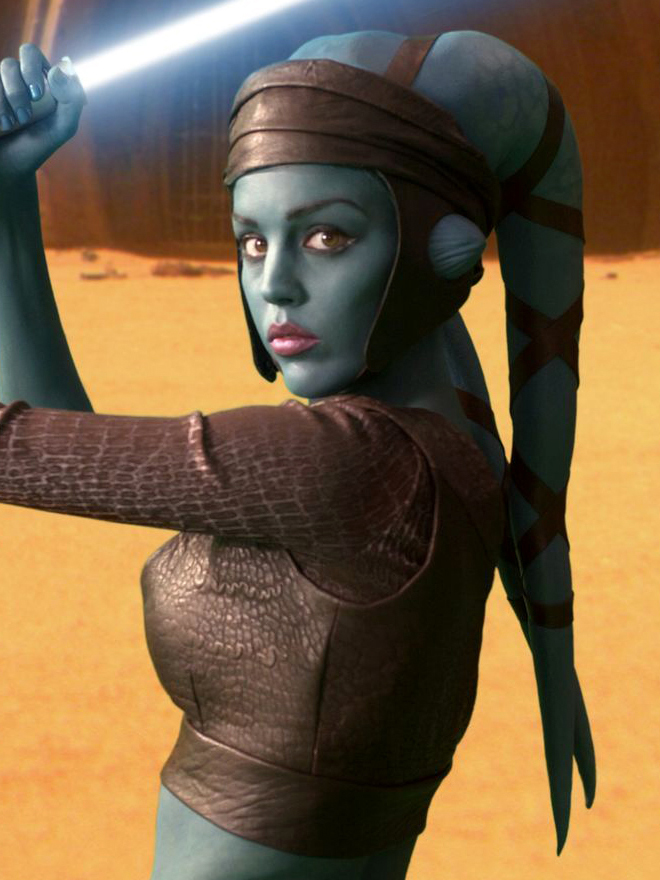
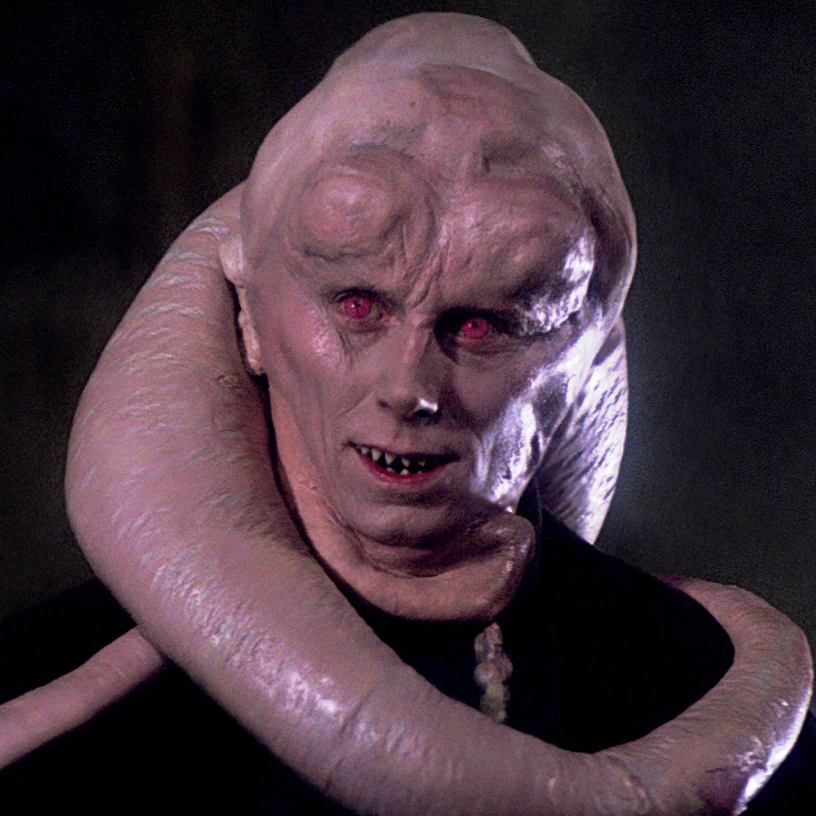
For example, look at this image of three Wookiees. They look similar, yes, but all distinctly different. And it’s easy to tell at a glance that none of these three is Chewbacca, or Tarfful (the other Wookiee who Yoda spoke to on Kashyyyk in Revenge of the Sith).  Likewise, if you were to look at Aayla Secura and Bib Fortuna, it’d probably be difficult to tell they’re both Twi’leks.  And look at all the minute variations on these Gungans.  So many races in the Star Wars universe are like this, and I love it because it reflects how the human race is. If we’re varied in structure, appearance, and the like, why aren’t other races?

This is what I strive for when it comes to crafting my races. I want to be able to describe a member of a race as more than just “he looked like a member of the race he was part of.”  Difference in skin tone, weight, height, facial features—I want for my fantasy races to have what we humans think of as races: reptilian beings with tan scales, dark brown scales, light red scales, etc.  It’d be easy to go with more simplistic races, but I want more variety than that.  Star Wars has set the standard for me, and I’m going to try to live up to it.

Friday, May 10, 2013

Warrior, Wizard Deleted Scene

I wrote this scene for “Warrior, Wizard” up a while ago, and after a lot of consideration, I decided that I’d probably have to drop it from the final project.  I like the scene, but the story’s getting far longer than it was supposed to already. While I think it does a fairly good job of expanding on both the dynamic of Jaren and Alera and some details about the world itself, there’s just no place for it in this particular story.  There are, obviously, some bits of this I’d tweak if revisiting it, but I’m pretty happy with how it turned out as a first draft.

So with no further ado, here’s the scene:

***

“I don't see why we even took this mission,” Alera grumbled as she followed Jaren up the slope, ducking tree branches as she went. “Isn't this the third time that Kard's ended up in this situation?”

“It pays well,” was the only reply Jaren offered. He couldn't defend the mission past that, since it was more dangerous than the pay was worth and Rowen Kardanere really didn't have an excuse for his latest blunder. The boy was currently being held by a group of bandits he had taken off to deal with. He had, as usual, taken too big of a bite to swallow and found himself in need of rescue again. Rowen really should have quit the League half a year ago.

“So in order to get paid, we have to keep him alive,” she said.

“Again, it's good pay. And if we manage to subdue the others and bring them in, it's even better.”

“And there's, what, three of them? So all we have to take out three of them without killing them before they decide that it's not worth keeping Kard around for ransom.” She grunted as a branch Jaren had brushed aside swung back and smacked into her shoulder. “Should be easy enough.”

“Oh quit whining, Quill,” he told her. “Besides, if we take care of Kard first, it's an extra hand.”

“If we can even save the kid.”

“Quiet. We're getting close.”

Jaren stopped her and pointed. Through the foliage they could make out a small shack. “There's smoke,” he said, keeping his voice low. “They're probably outside.” He gave a quick glance at the sun's position. “Maybe eating, though I can't be sure. One of us should circle around to the back of the shack to set up a pincer motion. The other should at least attempt some negotiations to give us time and see if we can keep the fighting to a minimum.”

“And I suppose I'm stuck with negotiations.”

“Yeah, well, you're not my first choice for diplomat either. Ow.” He barely acknowledged her as she slugged him. “But you're good with words. I wouldn't stand a chance.”

“I swear, when I get back I'm joining the Five Lilies,” she grumbled.

“Hey, if you want to demote yourself like that, sure.” He grinned and padded off before she could respond. It wasn't often that he got a halfway decent retort in against Alera, and he hated spoiling the few he managed.

He approached the shack from behind. It was a small structure, and Jaren wondered briefly how three men—four with Rowen—could even live there comfortably. As he approached, he glanced around. There were two men outside. One must have been inside with Rowen. The two were, as he had guessed, sitting around the fire as they ate, engaged in bawdy conversation.

He approached the rear of the shack and peered through the window. He couldn't see Rowen, but he caught a glimpse of the other man. He was searching for something, but not frantically. He crept along the side of the house and checked on the fire again, being careful that the two men didn't notice him. There was an unattended, half-eaten bird on a spit. He couldn't be sure, but it was likely that the other man had been with them earlier and would be rejoining them shortly. If they were to launch a surprise attack now, they were likely to get caught off-guard in turn by the third man.

He saw Alera off on the other side of the clearing and waved to catch her attention. With a few quick gestures, he managed to communicate that the third man might reemerge. She nodded and stepped back into the trees.

There was a tense minute before the third man exited the house and joined the other two at the fire. A few moments later, Alera stepped out into the clearing, grabbing their attention with an exaggerated “Gentlemen!”

The men looked up. “Well, look what we've got here,” said one of the men. His greasy hair was long and disheveled and it didn't look like he had shaved in a while, creating the perfect image of an uncivilized wild man.

Another man, bald with a long, tangled beard, spat on the ground. “Looks like some fancy mage girl. You from the League, mage? Government job?”

She ignored him. “You have a boy here. Rowen Kardanere. What are you planning on doing with him?”

“League wants him back, League can buy him back,” said the third, the man who had been in the house earlier.

“The League isn't particular eager to have him back. Ransom won't be high.” Partially true. Any sort of ransom came out of their pay, and they were counting on little to no ransom for the job to be worth it.

“Well he doesn't have the build for heavy work out here,” the long-haired man said. “Can't be feeding dead weight. And he did try to kill us. Might do it again if we let him go. Only option we've really got is to dispose of him. We'll make it quick and painless. That's fair, ain't it?”

“I suppose that it would be on our head instead of yours, wouldn't it?” she said as Jaren slipped silently towards the shack's door. She did a marvelous job of not noticing him. His eyes would have instantly blown her cover if their positions had been reversed.

“I suppose it would,” the first man said. “Of course, like we said, you could buy him back.”

“So we're haggling for him, then,” she said. “How much do you want for him?” Jaren slipped inside unnoticed while negotiations continued, thankful that the shack had an animal pelt instead of a door.

It didn't take him long to find Rowen tied to a chair, a gag in his mouth. The boy's face lit up he saw Jaren, and he had to shush him before he tried making noise through the cloth. “They couldn't stand your voice, huh?” he said quietly as he cut him loose.

Rowen shrugged sheepishly. Jaren yanked the gag off, not bothering to be particularly careful.

The boy looked at him from beneath a mop of curls, giving him an embarrassed grin. “Oops?” he said, keeping his voice low.

“Where are your knives?”

“They're carrying them. Sorry, Jaren.”

Jaren started skulking around the shack, making sure to pay attention to the conversation outside. He winced and hoped that Rowen wasn't doing the same as he heard the ransom prices Alera was trying to haggle them down to. “You're good with knots, right?”

“Yeah, why?” There was a thump and a grunt from Rowen as the coil of rope Jaren had found hit his chest.

“Good. We're bringing them back alive. Make sure it's tight.” He glanced by the door and saw a solid wooden stave. One of the men apparently favored them. He grabbed it, grateful for a luck. It was a lot easier to not kill someone with a stave than a sword.

He poked his head out from behind the pelt that was serving as the door and nodded at Alera. She finished her sentence and seamlessly worked in a cough, signaling to him that she had seen him.

The men offered another sum. Alera made a show of pondering it. “Agreed,” she said. The men were taken off guard by her sudden agreement, and in that moment, she extended an arm towards their campfire. It suddenly flared to triple its size and intensity, and the men toppled backwards. It only took them a second to regain their senses, and they swiftly grabbed their weapons and charged at Alera.

Jaren was faster. He clocked one of the men in the skull with the staff as he charged and plowed into a second man. This distracted the third enough that he stopped. Alera held her arms up and flicked her wrists upwards. Pillars of stone rose from the ground, pinning the men in place.

“Kard,” Jaren said. Rowen scrambled over, grabbing his knives off of the ground, and began binding the men's arms. When he was done, Alera flicked her wrists back down and the pillars retracted. She exhaled deeply and plucked one of the birds they were roasting from the fire to eat. Rowen gave the bald man a little kick. Jaren responded by smacking him.

“If you're going to beat on them, do it while they can fight back.” He headed over to Alera and placed a hand on her shoulder. “Good job today.”

She tore off another bite of meat, rapidly chewing and swallowing before speaking. “Thank you. You did as well.” She took another big bite. “Even though you made me do all the work.”

“C'mon, Quill. Give me some credit, would you? Would you prefer that we just charge in?” He started hauling Rowen's abductors to their feet. “Besides, we still need to get these guys back.”

“So what's my cut for helping tie them up and take them back?” Rowan asked.

“We don't gag you on the way,” Jaren said. “Keeping them from killing you wasn't a good enough cut for you?”

Rowen looked down and turned red. “Okay, okay. Just asking.”

Tuesday, March 26, 2013

Webcomic Thoughts: The Value of Homestuck

I’m not one of those “Homestucks,” a term that here refers to a member of the Homestuck fandom (not quite as catchy or creative a name as Trekkies, Whovians, and Bronies, in my opinion).  In fact, I’ve only mentioned Homestuck once before on this blog, and that was to say it has the second-worst fandom I've encountered.  I’ve read Homestuck and I enjoy Homestuck, but I think that it is a terribly overrated webcomic.  There are people I’ve spoken to who could quote me as having said that Homestuck has no literary value and that studying it in a college course would be a waste of money (I’ve never actually said that last part but I’ve said something similar and implied that sentiment).

 As an English for New Media major, I am now eating those words.

 Homestuck is, by the way, a webcomic written by Andrew Hussie and is one of the stories he has written and hosted at MS Paint Adventures.  You can find it here ( brief warning: it starts out dull and it’s a VERY long read, but it’s also very entertaining once it gets moving).  Homestuck, however, is not like other comics.  Instead of using speech bubbles, it uses single-panel images (and sometimes animated gifs) with narration or dialogue boxes below the images.  It will also occasionally include music, short videos, or even fully interactive games.  There is also reader influence on the narrative.

 Basically, Homestuck is an experimental, one-of-a-kind story that is taking advantage of new media in a way that very few stories are.  Pretty much every other webcomic I’ve read could be translated to a print medium exactly as is.  Homestuck is truly a webcomic, not just a comic that’s on the web.  It is a new way of storytelling that couldn’t have existed just a few years prior.  And as an English for New Media major, I can say without a doubt that that shit is worth studying.  Maybe not for the story itself, but it is definitely worth examining just for how it’s told.

 Homestuck takes a lot of influence from interactive fiction games like Zork or Colossal Cave, and the game is framed as such.  It is told in second person (getting around being told from multiple viewpoints with the running gag “you are now X”) and contains text prompts—the difference being that instead of writing them in, they’re already written in for you.  Apparently there was originally a place for users to submit command prompts, but as the story grew more complex, Hussie had to drop it.  However, he retains that same style to this day.  So even from the first page of the story, a reader can tell that the story is meant to be interactive and, overall, a different kind of comic.

 Hussie also takes advantage of his medium by frequently including animated gifs to give the images just a bit more flavor.  The first one we see is again on the first page, but it’s just the protagonist looking around a bit and blinking.  The second one on the second page is what really sets the tone of how these gifs will be used.  After clicking the link to the next page asking what the protagonist’s name will be, we get this:


Wow.  Genius.  Absolutely genius.  I’m not even kidding.  This is a great way to introduce how gifs will be used in the webcomic.  They give you a little visual gag that images alone aren’t able to convey and that are too short to bother putting into video, as well as conveying just how much Hussie will be playing around with the fourth wall in about five seconds.  So we’re only on the first two pages of the comic, and we’ve learned several things:
  • Homestuck takes influence from interactive fiction
  • Homestuck may be somewhat interactive itself
  • Homestuck is not laid out like a traditional webcomic
  • Homestuck includes animated gifs
  • Homestuck has a self-aware sense of humor
  • The narrator breaks the fourth wall by interacting with the player/reader
  • The characters break the fourth wall by reacting to the player/reader

Eight key things (seven and a half if you don’t count the second point, but I believe original readers would have discovered that it was interactive right away) that end up being true throughout the comic all the way through, and it all shows up within the first minute of reading.  And that’s if you read slowly.

 The first act is by far the shortest and serves as an introduction to the story (as many first acts do), but it also includes a few pages with sound and concludes with a short video (consisting of animation and sound).  The first game (consisting of simply walking around and clicking on objects to interact with them) takes place very early in the second act.  These simple few things set the stage for the multimedia Homestuck will be using in the future.

 To briefly go back to Homestuck's structure, though: The separation of image and text allows for a very interesting use of variable pacing.  Sometimes, Hussie will drop text entirely and just show a series of images over individual web pages that either form a great visual gag or just provide tension.  Sometimes, a single image will contain a text box with a looooooong chunk of exposition.  Both are done in ways that traditional comics wouldn’t be able to—the first because the images would have to be full spreads (i.e., cover both pages) to have the same impact, and the second because that much text would take up several pages and cover the entire comic with speech bubbles.

 So that’s how Homestuck is laid out.  Just the fact that it’s a multimedia, interactive comic in the first place makes it incredibly unique, but I’ve got more to say.

 Andrew Hussie decided to make Homestuck up as he went along, scattering undefined story pieces as he progressed that he would be able to pick up later—something he referred to as “retroactive forshadowing.”  These objects had no real meaning when he created them, but he put them there knowing that he’d be posting the story episodically as he wrote it (itself a fascinating topic since it limits revision so heavily), so he gave himself options.  Why?  Because, as Hussie put it, “There was only one sure thing I knew when starting HS. That was that this thing would go batshit insane in ways I couldn't begin to imagine. In fact, it was practically the mission statement.”

So how did Hussie undertake writing this “batshit insane” story?  With the power of crowdsourcing.  Now, Hussie ultimately has ultimate control of the comic.  But a lot of what gets written is inspired by the readers and the Homestuck fandom.  Characters that people like can gain more attention.  Fan theories can become canon.  Hussie does a lot of pandering.  Why?  Because, above all, Homestuck is an experiment.

 The quality of the writing wavers.  It wavers heavily.  There are a lot of absolutely hilarious or amazing moments followed by a lot of pointless angst or terribly slow pacing.  There are great plot developments, and there are things that are really, really dumb.  A lot of this is due to Hussie attempting to experiment and take chances in order to gauge readers’ reactions, and every writer reading Homestuck should take note of this and watch for what works and what doesn’t.  Let me give you just a quick example: Vriska Serket.  She was designed to be a “base breaking” character: a character that people would have violently different opinions on.  She does a jig on the line between “cool and awesome” and “too blatantly cool and awesome and also unlikable.”  Some people, myself included, can’t stand her.  She’s the undisputed favorite character of others.

 Basically, Andrew Hussie has a very strong relationship with his fans.  It’s an ambivalent one to be sure—as much as he panders to them (to the point of tweaking a few jokes when they caused some backlash), he also trolls them very heavily.  The whole thing is basically a game for him, seeing how far he can push his experiment before it collapses (the answer is surprisingly far), to the point of Homestuck almost feeling like a sociology experiment.  And as the writing industry changes, this sort of relationship is what we should be looking carefully at. Social media is changing the relationship between creators and readers, making the gap between them just a little bit smaller.

 So how good is Homestuck as a story?  I’m leaving the answer of that question up to you, since it's not important to what I'm saying.  If nothing else, Homestuck is worth looking at because of how it’s written.  Hussie is paving the way for new media writers by taking storytelling chances and by testing reader reaction.  That is the value of Homestuck, and while my opinions on it may be mixed, I hold Hussie in high esteem.

Wednesday, January 30, 2013

Magic and Technology

Oh boy.  Magic and technology.  Wow.  That’s a tricky subject.

There are a lost of ways to play the relationship between magic and technology.  There’s what I call the Inverse Law of Magic and Technology, which is the idea that magic and technology somehow interfere with each other.  The more technologically advanced a society is, the less magic will work, and the more magical a society is, the less technology can be developed.  There’s the fact that sufficiently advanced technology is indistinguishable from magic, and sufficiently analyzed magic is indistinguishable from science.

But for whatever reason, magic tends to exist primarily in medieval settings (with plenty of exceptions).  And in most of those medieval settings, there’s very little advancement in terms of technology, culture, government, etc.  It’s called Medieval Stasis, and it’s something I really want to avoid.  The reason for that is that, if we think of magic as a science, we can compare it to science through history.  New methods and applications of magic can be discovered.  There’s potential for a magic-based industrial revolution.

And yet, there are only two series that come to mind that avert this medieval stasis thing: The Last Airbender and the World of Shannara.  The latter has a political struggle involving the rise and fall of the Federation that spans multiple series, as well as the order of the Druids.  There have also been developments in airship technology.  And, of course, there’s the fact that this is a post-apocalyptic earth and there are a ton of chances to show off lost technology and its interaction with magic.  The latter does it even more impressively, with the world going from having some rudimentary steam technology to flat-out steampunk, bending being implemented into a professional sport, and metalbending and lightningbending becoming more common in just two generations.  And the whole transition somehow feels completely natural.

So anyway.  I’m struggling with how to work the technology in Warrior, Wizard, and it’s consequently going to sound like a lot of anachronisms if you’re not paying attention.  You see, due to enchantment (one of the four primary schools of magic), things can be made to act like items in our world, and it can be done more simply.  Here, someone said “hey, wouldn’t it be great if there was a device that would keep things cold?”  And then we spent a lot of time and effort developing the technology needed for the refrigerator.  There, someone said “hey, wouldn’t it be great if there was a device that would keep things cold?”  And then an enchanter spent some time enchanting a wooden box so that it would keep whatever’s in it cold.  Boom.  Invention of the coldbox.  Enchantment isn’t an easy process, but it basically allows objects to do something a mage could do, only a bit more efficiently.  So instead of light bulbs, they have light orbs.  There’s water running through pipelines, but the process of transporting it is different.  So what happens is I end up with a society that is, for all intents and purposes, a medieval world.  Swords and sandals and sorcery.  But it’s a world where there appear to be eclectic lights, refrigerators, running water, and the like.

And that’s the issue I run into.  How do you explain this magic technology without going on a huge discourse about it?  And really, the only thing I can think of is that I…don’t.  I just let the technology speak for itself since I don’t have room to speak for it at this point.

Friday, December 28, 2012

Warrior, Wizard Rough Draft Preview

Hey, everyone!  Like I said, I’d be posting the rough draft of the opening scene of “Warrior, Wizard” when I finished it.  Keep in mind that this is still the rough draft of the scene, may end up only being part of the full scene, and probably has a lot of work that needs to be done yet.  This is solely for preview purposes.

So with no further ado, I present:

Warrior, Wizard

One kill.

That's all it was. One more dead body. One more outlander defeated. One out of dozens.

But that one kill was enough to make Jaren Manse sit down. To actually stop and think. Not to contemplate who the man was or where he came from or why he had come. No, he had stopped asking those questions hundreds of deaths ago. This man was important because he was not his kill, but Alera's. Jaren had held nothing back on this mission, but for the first time ever, Alera Quill had outperformed him.

Forty-seven. Forty-seven to his forty-six. It was one kill. Just one kill, Jaren told himself. It didn't matter. And besides, this is what he had wanted. The two of them stood on equal ground now. Alera could keep up with him.

He just hadn't expected to be so shaken by it.

He sat on a log on the beach and watched his partner lobbing fireballs at the outlanders' ships in the fog covering Lesaria's shores. Few discovered the land. Even fewer returned to tell the tale. It was, in large part, thanks to the League, a collection of guilds and adventurers acting as everything from mercenaries to postal service to military. All able-bodied peoples were welcome, and there were plenty of well-paying jobs, but there were few who truly gained glory and notoriety. Jaren realized that he and Alera now stood a very good chance of becoming a part of those few.

As the ships started to catch, Alera walked over and sat on the sand beside him. She was a pale-skinned lithe girl that Jaren thought of as short, though that was admittedly because most people were short relative to him. She exhaled deeply and brushed her long black hair out of her face. “That was a good day,” she said, looking up at him. The bleak mist really drew the color out of her violet-grey eyes. Jaren just nodded in response. “The mission went well, don't you think?” she prompted.

He nodded again. “Yeah,” he said distantly. “Yeah.” He managed to find himself again and turned to his partner. “You outperformed me today, you know. Good job.”

“What? Is that why you—you meathead!” She punched his shoulder, though he barely even felt it under his armor. “That's what's got you like this?” She gave a small chuckle and shook her head. “So how badly did I beat you?”

“Just one,” he said.

“One? Just one?” She laughed. “That's what has you like this? Please, Jaren, that's more of a tie than anything. Luck of the draw. Besides, we're being ranked together. It's not like the count even matters.”

He removed his helmet and let the cool ocean breeze dry the sweat against his face. “...Yeah. It's just...weird.” He looked over at her and saw that she was staring out at the burning ship, a distant look in her eyes as well.

“Yeah,” she echoed. “Weird. I'm as strong as you are now.”

“Yeah, it only took you eighteen years, too.”

She flicked a small ball of flame at him with a grin. “Oh shut up, Manse. Still,” she added as he swatted at the flame, “I'm really glad you stuck with me all these years.”

“I'm glad too. You know, I think we stand a chance of making the lists this year.”

“What, us? There's only two of us.”

“And Ezeo Nohr was only one man, but look at what he accomplished.”

Alera laughed and stood, taking Jaren's hand and pulling him to his feet. “Ah, yes, Master Ezeo. Remind me again, is he on par with the gods, or greater than them?”

He gave her a playful shove. “Shut up! He's an impressive man, you runt.”

“This runt beat you today, meathead.”

“Yeah, well, enjoy it while you can. You know that there's no way I'm letting that happen again.”

“As if!” She grinned. “I've tasted victory now. I won't let it slip past me so easily anymore.”

They joked and talked like that on their way back to the League. The organization had started as just a single, simple guild hall, but had grown larger as dormitories were added for adventurers. Additions to the hall were needed to accommodate the League's growth. Blacksmiths and enchanters flocked in to sell their wares. The League expanded as its fame and popularity increased. In the three years that Jaren and Alera had been members, it had finally overtaken the city. What had once been known as Amnestia City was now simply the League. Many of the same shops remained, but vendors knew their sales base consisted of two groups: adventurers and tourists.

“So the Winter's Requiem have invited us and Deadeye out tonight,” Jaren said as they entered the city gates. “Celebrating the outlander defeat today.”

“Really? Is Ashna coming this time?”

Jaren thought. The reptilos man wasn't exactly shy, but.... “I'm not sure. I wouldn't expect him. He's not fond of being around so many humans.”

Alera rolled her eyes. “Why doesn't he just invite some more repitolos? Does he not get any say? Anyway, I assume you're planning on going?”

“Of course. They're footing the bill. I'm not going to pass on a free meal.”

“And Deadeye will be there.”

He hesitated. “Okay, yes, and Deadeye will be there, but come on, Alera. Free food. You're going, aren't you?”

“Of course,” she said, doing her best imitation of his voice. “They're footing the bill. I'm not going to pass on a free meal.”

“Hey, Quill, remind me again why I didn't dump you with the first guild I could to go solo?”

“Because you know I'd make you look bad in the lists.”

He shook his head. “Don't get cocky, yet, Quill.”

“Don't get cocky yourself, Jaren. We did good today, but we've got a long way to go before we make the lists. Think we can do it within the year?”

He put on a great show of thinking hard about it before answering in his best imitation of her. “What do you think, meathead?” It was, admittedly, not a very good imitation. Water splashed out of a nearby trough as they passed to splash him as the mage took her revenge.

“Come on, Jaren,” she told him. “Let's pick up the pace. We've got dinner to catch, and I'm famished.”

He grinned. “Agreed. C'mon, I bet we can rack the bill up enough to make Drolm actually faint this time!”

***

Well, that’s how the story opens.  There’s a lot I’d like to change yet.  The whole scene feels a bit too dialogue-heavy, several of the names of things may change (though the names of the protagonists and Meela “Deadeye” Ran, Ashna Szil, and Arten Drolm will probably remain mostly the same), and I can probably write it much better once I’ve got the full story laid out in front of me instead of just half of it.

Thoughts, though?  How did you like it?  Any suggestions that I’ll want to keep in mind when rewriting?  Let me know!

Tuesday, December 25, 2012

Warrior, Wizard Status Update #3: Worldbuilding

It’s that time of the year again: holiday season.  The time of the year that pretty much guarantees that I’m too busy or too distracted to write.  However, while I haven’t been able to sit down and actually write on Warrior, Wizard, that doesn’t mean that I haven’t been working on it—or at least on the larger universe surrounding it.

Yes, I’ve been doing worldbuilding.  Here’s a bit of what I’ve got so far.

I’m focusing primarily on the human customs at the moment.  I’ll be delving into the reptilos, ogre, and gnome cultures more in the future (also possibly renaming the races as all those names are just working descriptions), but they don’t show up in Warrior, Wizard very prominently since our two primary characters are male.

The place I decided to start with my society was by bucking some standard fantasy conventions.  Fantasy is so frequently a genre that elevates the “fair” above all else.  Going by the four most standard fantasy races, the elves are prettiest and therefore the best, the humans are below the elves but run pretty much everything else, the dwarves are demoted to comic relief and get no respect, and the ugly orc knockoffs are savage beasts unfit for more than being canon fodder.

I really wanted to avoid that and did so by taking a different direction with beauty and race.  There are four main skin tones among humans.  I can’t exactly describe the tones since I’m not really an expert on skin tones (I live in a very homogenized location), but going with the Fitzpatrick Scale as my indicator of skin tone, the tones would probably be about 2, 3.5, 4.5, and 6, with the two middle tones being the most common and the lightest tone being the minority.  I want to give the world a more Mediterranean feel than the Medieval British Isles feel that most fantasy has.

I’ve also been thinking about “beauty” and what is and isn’t “attractive” in this world.  As we all know, beauty is in the eye of the beholder.  It’s relative, and different societies in the past have had different standards of beauty.  This society favors the strong, so I’m trying to reflect that into the standards of beauty.  Neither the portly nor skinny are particularly valued: instead it is the strong.  With the physical fighters this is obviously seen in muscle, but with mages, it’s more a manner of how they hold themselves—and the apparel they wear.  A mage can get by on being slender (though being particularly thin would generally indicate malnourishment) because they wear robes denoting their strength.

Two practices are also fairly common: tattooing and decorative scarring.  Both are generally regarded as fairly ritualistic and are almost always done to commemorate special accomplishments, so it’s not like everyone is walking around covered in tattoos and/or scars.  Also, naturally obtained scars are considered highly attractive and sharing “scar stories” is a very common icebreaking conversation.

Which brings us to gender in society.  I specifically wanted to avoid writing a patriarchy, but also didn’t want to write a matriarchy.  I think a large part of why patriarchies evolve is because men generally have more natural strength than women.  So the men would hunt and the women would take on a social role, and men have ruled the world while women rule the men from that point on.  However, magic throws a wrench into things.  With a skill based on study and intellect that trumps pure strength, men and women have been pretty much on equal standings.  This leads to a lot more women who are actually physical fighters.  No one’s telling them they can’t.  Skill’s not a gender issue, and with enchantment and enhancement, it’s not like physical strength is the final say in everything. 

It also led me to think about the family structure.  Since characters have both first and last names, who do they take their surname from?  What are surnames like after marriage?  I had several different paths I could have taken with this.  One was joint names like some couples do now.  Of course, this could potentially end up with someone taking both their parents names ad nauseum and after just a few generations you end up with a John Smith-Doe-Miller-Wayne-Anderson-Richards-Smith-Koerner.  Another option was for the males to take the father’s name and the females to take the mother’s name, like a family I know.  However, I didn’t really like that idea, and I had already given Alera and her father the same surname.  Those were the same issues with the child having a different surname from the parents altogether.  I finally decided, though, that a new surname was chosen upon marriage.  Sometimes one half of the couple would keep their name or a name would be chosen in reference to one of them.  After all, names and the standing they have can mean a lot.  For example, I imagine that there was a Manse Smith (the surname here isn’t particularly important), and his son and said son’s wife took “Manse” as their surname.  The name “Manse” was passed on for generations to Jaren Manse.  If Jaren gets married, he’d probably insist on keeping the name as well.

So yeah, those are some of the little pieces of the society that I’ve been focusing on.  And from the types of things they are, you might think it’s an attempt to be politically correct or “progressive” in my writing.  In reality, though…it’s not.  It’s really just my attempt to make a world different than ours, and different than standard fantasy.  Medieval Europe is far too stock, so I blended it with a bit of ancient Rome and Greece.  Elves and dwarves are commonplace, so I wrote them down on a list of things I wanted to do, crossed them off and marked them with a big “NO.”  Humans are generally limited to a single Caucasian race, so I made the lighter-skinned humans the minority.  Elves being held up as the standard of beauty just annoys me, so I went a different direction with it.  As for the role of gender?  That’s largely a holdover from early Fire Emblem inspirations that I wanted to keep.  In The Sacred Stones, I’d take Amelia over Gillam just as soon as I’d take Joshua over Marisa.  And besides, you’ve got magic in the equation.  When Lute (the biggest inspiration for Alera) is flinging fireballs around like nothing to take out enemies three times her size, it really makes you resent females in fantasy being reduced to the white magic girls. 

So I guess maybe there is a little gender equality behind that particular choice because turning all female fantasy characters into nuns is stupid.

Anyway, that’s what I’ve been thinking on lately.  There have been a few other things, like some customary greetings (a kiss on the forehead between males), common forms of entertainment (theatre has grown very popular in the last few years), and the color of robes mages wear (a fairly simple system that will tell you what mage class and disciplines they are at a glance).  However, those are some of the more notable social things.  I hope you enjoyed reading about them, and I hope they excite you for that preview that I have coming!

Friday, November 23, 2012

Warrior, Wizard Status Update #1

Things are not going as planned.

I thought "Warrior, Wizard" would be fun!  Because writing is fun!  I love writing because of how fun it is!

Naturally, I've spent so much time not writing that I've forgotten that writers only pretend writing is fun so that they don't go Coo Coo for Cocoa Puffs.

I think the thing that's getting to me is the length.  WW is getting daunting because it's a short story that's apparently pretty long.  I'm not breaking it up into chapters because, at this point, I can't.  I wouldn't even know how to since I'm writing it chronologically, a word that in this case means, ironically, out of the proper order.  Even when I finish it, I don't think it's going to feel like a "chapter" story.

This is different from pretty much everything I've written before.  Most of what I've written have been chapters for novel-length projects or updates for blogs (which are like chapters, only shorter and there's more of them).  Chapters are usually about 5-10 pages long in my usual style (12 pt Times New Roman, single-spaced--I'm an idiot who hasn't quite figured out how to measure length by word count).  The few short stories I've written have also been around that length. 

But WW?  I'm twelve pages into it.  I've just passed the 7000-word mark.  And here's the thing: I'm not even half done with it yet.  It is easily twice as long as I expected it to be.

That's not to say that I haven't made good progress in it.  I don't have time to write at NaNoWriMo speeds (and it's clear that even "finish WW" is going to be an unrealistic goal for the month), but at least half of that has been written this month.  And while I'm not to the halfway point, I'm close to it.  I only have a few more scenes to write.  And then a few more that I had skipped over.  But then I'm to the turning point, where Alera and Jaren are at approximately the same strength.

Which means that I'm finally almost to the beginning.  Non-linear order is weird like that.

I've also been brainstorming on the world some.  After some long, hard, consideration and weighing all my possibilities, I've come to the enlightening conclusion that it's all just a bunch of shit that doesn't matter in the first draft.  Sure, I can toss it ahead of me and slog through it, but all I've accomplished is that I've made a mess and everything stinks of poo.  No, what I should be doing is focusing on planting the story, and then taking that same crap and sprinkling it behind me afterwards to fertilize it.

But back to the length.  Let's say that, at my "not-quite-halfway" approximately 7000 words, I'm actually at half because I look back and say "there's a lot I can cut out."  Double that so that I've got 14,000-16,000 words for the finished product.  That's an awkward length.  For comparison, NaNoWriMo's goal for "completed novel" is 50,000 words.  The first Harry Potter book (i.e., the shortest) is about 77,000 words.  Meanwhile, flash fiction is about 500 words or less, short stories run from about 1500 words (pretty darn short) to 5000 words (pretty long).  Get up near 10,000 and it's hard to call it a short story anymore. 

So if I can't cut a whole lot off of WW (since I certainly can't/won't pad it to four or five times the length), what exactly is it going to be?  Apparently, that puts it somewhere between "novelette" and "novella."  And since I hope I can actually publish this story, who exactly do I go to?  Sure, you've read short stories in magazines or anthologies.  And I'm certain you've read novels.  But novellas and novelettes?  They're not exactly common.  As much as I'd like to try getting it published somewhere that actually has some repute, I may have to try to find a market for it on an e-reader.  Who knows?  Maybe it'll catch on.

Of course, if this whole story turns out to be a steaming pile of salvageable junk, I'll be upset.  Maybe a synonym for upset.  Livid, maybe.  Yeah, I like that.  Let's go with livid.

Thursday, November 1, 2012

NaNoWriMo and Warrior, Wizard plans

If you haven't heard of National Novel Writing Month, or NaNoWriMo, it's basically an attempt to write a 50,000-word novel during the month of November.  It's not about writing a good novel, just about getting the words down.  Quantity over quality.  Editing can wait until December.

I've attempted to do it for a few years now, and failed each time because of distractions.  So this year, I've decided not to participate.  Instead, I'm going to push myself to finish "Warrior, Wizard."

I've been working pretty hard on WW.  Not the actual writing part, but the preplanning part, which is taking a lot longer than I've expected.  Once I started writing, I realized that I needed to know how my magic system worked.  And once I started writing again, I realized that I also needed to know how exactly my world worked.

At this point, I've decided that while the "Warrior, Wizard" I finally release to...wherever it is I release it will be a final draft, it's also not going to be the final final draft.  It's more like a beta release, or a pilot episode, since I plan to revisit the world of Lesaria.  Or maybe not Lesaria, since the name is definitely not final.  I like the world I've started setting up, and I'd like to refine it.  History, themes of racism, the world outside of the isolated island it's set on, the political dynamics, the different cultures and subcultures...these are all things I'd love to explore, but WW is not the story to do that.  WW exists to tell the story of Jaren and Alera, and in this case, brevity is the soul of wit.  A reader doesn't need to know who Caro Plith is or what influence he had on the study of magic since Jaren is our POV character and probably doesn't even know who Plith is.

So after I've gotten the basics of the world nailed down a bit more (which I've almost finished), the plan is to write.  Try to push out at least one scene a day until I've gotten the whole timeline done.  Put the scenes in the order I'd like them.  Look at how it works, then remove, add, and change scenes until I find something that works.  Tweak them to make them flow together better.  That should be the point where I can officially say that the story has moved from "rough draft" to "completed first draft."  Then I find some people who can give me feedback.  Get critique, edit accordingly, and rewrite until I'm satisfied.

What will I do when I'm finished with it?  I'm not sure.  I might send it in to a few places.  See if I can get it published.  Experience the joys of rejection letters.  I've only gotten one so far, so it'd be nice to get a few more before I can get anything published.  And then?  Then I set it aside for a while.  Work on another project.  Actually get some things written before I come back to Lesaria, because why on earth would anyone want to work on a single project?

I mean, come on.  That's just ridiculous.

Thursday, October 25, 2012

Projects: DSTM Visual Novel Planning

Oh boy.  I'm starting to realize just how tricky of a project this is going to be.  Let's look at the "to do" list, shall we?

  • Learn how to code in Ren'Py so that I can actually write the VN.
  • Write the events up to Caper's death, since that's where everything will finally start branching.  Of course, since this is all from Poe's perspective, almost all of this will be made up of completely new scenes that will require me to work on developing at least one character who got virtually no screentime in the blog.
  • Figure out the general storyline for each "path."  I have an idea for what I want for the paths, but no real knowledge of how I want them to go beyond the one that Don't Shoot The Messenger eventually followed.
  • Work on a general progression of "scenes."  What scenes are involved in which paths, and what scenes are part of all paths?
  • Figure out what choices will need to be made along each paths.  Basically, make a flowchart for the entire game.
  • Write it.  And then rewrite it, rinsing, lathering, and repeating until I'm satisfied.
And that's just the scripting.  That's without even mentioning the music (which I probably won't be able to do) and the art (which I definitely won't be able to do). After that I have to code all the images and music and sound in, learn how to manipulate those elements better in Ren'Py, and again, rinse, lather, and repeat the process until it's done.

I'm starting to wonder if this is even worth it, considering that by the time it's done, DSTM will probably be irrelevant and I don't know if the story can even stand well enough on its own.  I think it'd be an amazing story, but it has the potential to be extraordinarily dependent, meaning that the potential audience would be tiny.  Oh well.

Saturday, October 13, 2012

Writing: Why I Currently Hate "Warrior, Wizard"

Step 1: Listen to audiobook that mentions elves/fairies/the fey/some other name that means the same thing.  Hear a reference in the text that mentions how the people are strong with magic, but have frail and physically weak bodies.  Think of the Linear Warriors, Quadratic Wizards trope.

Step 2: Think of how that form of development might cause some tension between a warrior and a wizard.  Begin to formulate the concept.  Decide to use anachronic order and solidify the characters a bit.  Smile as things start falling into place.

Step 3: Start writing.  Realize I have no idea where to start.  Start at the beginning and decide to go roughly chronological, at least at first.  Brainstorm and make a list of scenes that I want to include.  Smile as the plot starts to actually take form.

Step 4: Make it through the first scene and start on the second.  Struggle with it.  Spend a lot of sessions opening it but not making any sort of progress whatsoever.  Tear my hair out over it.

Step 5: Work on actually developing the magic system some more.  Get the basics down.  Take pride in the fact that the development is moving past "Fire Emblem class system ripoff."  Use the inspiration to launch myself back into the project.  Feel my excitement build as I open up the document.   ...Find myself moving barely five sentences forward as I try to slog through the thoughts.

Step 6: Try again.  Cheer as the world starts falling into place a bit.  Press through the difficulty of starting and get in the groove.  Find out more about my magic system as I write (like the entire empathy system, which I hadn't thought to add).  Finish the scene.  Stand up and raise my fists in the air in triumph.  Uncork the champagne bottle.  Drinks all around!  It's a time for celebration!  Take pride in knowing that, now that I'm on a roll, the rest should write itself.  Smile smugly while sitting in my fancy recliner, dressed in my most pretentious robe and smoking five pipes at once.

Step 7: Move on to the next scene and instantly experience a complete writer's block as I realize that I really have no idea what the missions my characters take on will be like and that I don't even know if I'm going to include non-human races in my world.

Yaaaaaaaaay....

Thursday, October 11, 2012

Anachronic Order

I'm currently working on a short story/novella called "Warrior, Wizard," which is about two friends (who are, as you may have guessed, a weapons user and a magic user) who end up struggling with the growth of their strength at different times.  It's based around the concept of "Linear Warriors, Quadratic Wizards," or the fact that in gaming (and other forms of media, but this is most noticeable in tabletop and video gaming), warrior classes develop at a steady rate while wizard classes start weak but become insanely powerful.

This is a different discussion altogether, though.  I could go on about it, but all that's really important to know is that I'm writing a story where one character always feels like they can't compare to the other, but the balance shifts halfway through.

When I set out to write this story, I knew from the beginning that I didn't want to tell it in chronological order.  I wanted to show that, as much as my mage struggled with feeling inferior at first, my fighter felt just as inferior later on.  I didn't want a gradual shift but a side-by-side comparison.  And so I set out experimenting with anachronic order.

Anachronic order, or rather, nonlinear order, can make for a wonderful storytelling device.  It can be used wonderfully a lot of different ways for a lot of different reasons.  In "Warrior, Wizard," it's to show that the two aren't really as different as they think and that both have their periods of feeling inadequate.  It provides a sense of dramatic irony.  While the mage feels like she's a burden when she needs saving, the audience knows that she's the one saving the fighter a few years down the road.  It plays the two dynamics against each other.

I'm not entirely certain how I'm going to tell the story quite yet, though I'm leaning towards finding an important event near the middle of the timeline and working forwards and backwards from there.  How I'm writing it, however, is chronological order.  It's maybe not as fun to write, but I think that I'll need to in order to figure out what exactly it is that happens so that, when I'm working on the order of the segments, I can refer to past events that have happened in-story.  It'll be less fun, but will also mean less rewriting.

But let's look at some other bits of media that have already used the device.  Four, to be exact: a movie, a live-action TV show, an anime, and a book.  All from different mediums (though you could make an argument for television being the same medium, even though one is animated and one live-action), all from different genres.  All use the device in a different way, but all to wonderful effect.

The first one I want to talk about is MementoMemento is a movie about a man who, after an injury following the death of his wife, loses the ability to make new memories.  The movie actually has two interspersed timelines: one moving forwards that consists mostly of the protagonist giving exposition, and one moving backwards, which details most of the action in the film.  The timeline moving backwards shows us exactly what is going to happen, but since most of the scenes begin in medias res (or "in the midst of things"), we're not left wondering what's going to happen, but how it's going to happen, and how the current scene will lead into the previous one.  Not only does the narrative choice make the movie interesting, it's stylistic.  The story is told in anachronic order to mimic the protagonist's short-term memory loss.  In each scene, we only know as much as the protagonist does at the time.

The next one is LOST, that show about the people who land on an island and then there's mystery and more mystery and magic and science and what's that in the woods and time travel and so on and so forth.  As easy as the show is to poke fun at for its convoluted plot (and its inability to get around to answering questions and its constant dropping of plotlines and WAAAAAAAAALT and so on and so forth), I absolutely love the show for two reasons.  The first is the attention given to characters.  But the second is the narrative style, which was what most people love about the show and has been imitated frequently since.  Every episode of LOST tells two stories: what's going on currently with the people on the island, and what happened in their lives to bring them to that point.  It becomes clear early on that all of the survivors of this plane crash are connected in some way.  The flashbacks are all out of order, and it's used to give you the story piece by piece.

The next story I'm going to talk about is House of Leaves, by Mark Z. Danielewski.  While there is plenty going on in this story, anachronic order is used to provide a sense of confusion.  Most of the book is framed as notes on an incomplete dissertation on a documentary.  It's unclear whether or not the documentary itself uses anachronic order (though it very well might, especially if it's interspersed with interviews that reveal the nature of the house earlier than the narrative does), the notes and dissertation perspectives are fractured, with the dissertation being compiled of bits and pieces that may not have originally been parts of the same chapters or even intended to go in the final product, while the notes seem to jump around in chronology some as well.  In House of Leaves, this adds to the general surreal feeling of the novel, where it's hard to tell what all is true or real.

But perhaps my favorite example of  anachronic order is in the anime Baccano!, which uses it masterfully.  The show begins with a young girl working with a newspaper trying to figure out how to tell the series of events surrounding the Immortals.  It takes place over three years (1930-1932).  Each year has its own arc, with 1930 focusing on the (re)creation of an Elixer of Life and a few mafia families, 1931 focusing on a multi-party train heist, and 1932 focusing on the Genoard family, with the young daughter searching for her asshole of a brother.  All three storylines are connected through the characters, and even the individual arcs themselves are told out of order.  In fact, the very first episode shows scenes from the end of each of the storylines.  Baccano! is consequently very hard to follow the first time around, but there's a point to the order the story is told in, which is explained in the very first episode: as in life, there is no true beginning to a story (in fact, the 1930 storyline actually begins in 1711), nor are there main characters.  The jumping around from period to period focusing on multiple characters emphasizes this perfectly.  A character described as "main character-ish" is only the debatable protagonist to one story (in which he's no more crucial to the plot than many other characters), and the characters with perhaps the most screentime are connected to all three plots--but largely just tangentially.

Basically, as confusing as it can be, I love anachronic order.  It's a wonderful way of framing a story, if done for the right reasons.  So now my job is to figure out what order to tell "Warrior, Wizard" best.  Randomly?  Jump around between relative stories?  From the ends to the middle?  Or, as I'm leaning towards, from the middle to the ends?  I'm probably going to go with that last one, since it will provide the most contrast.  Now I just have to write the darn thing.

Wednesday, August 29, 2012

Project: Don't Shoot The Messenger Visual Novel

As some of you reading this might know, I wrote a blog called "Don't Shoot The Messenger," set in the Slender Man Mythos.  Basically, it was about an man trying to find who he was and where he fit in the organization he was part of.  I'm not going to really elaborate since those of you who know about it have read it, those who care enough will read it, and those who don't care enough probably won't even read this post.

Anyway, a bit ago, a friend of mine was playing Katawa Shoujo, which is an absolutely amazing visual novel with a terrible premise (dating sim/H-game about disabled girls developed by members of 4chan).  And then I thought back to DSTM and remembered how, early on, there were a few parts of the story that would be affected by how people shipped certain characters.  I jokingly tossed the idea of a DSTM dating sim around.

And then I thought a bit harder, and realized something.

While the Messenger was the narrator of DSTM, Poe was arguably the main character.  Most of the plot involved her somehow.  Unfortunately, due to her quiet nature and the Messenger's reluctance to go into great detail about his life, there was a lot of depth to her character that didn't see the light of day.  And many of the alternate story paths we were considering featured her.

So I figured, instead of making a dating sim as a joke, I could make a serious story told from Poe's perspective.  It would rehash some of the events of DSTM, expand the world some, and explore the story paths we didn't take.  And with those branching paths, a visual novel would actually be the best medium to tell Poe's story

And now...well, I'm stuck on the idea.  Even started writing some of it up.  It's not going to be easy, of course.  I have no clue who I'm going to get for an artist, and even less of a clue who's going to do the music (if I even include it).  AJ (Poe's author) insists on being involved.

So yeah.  A lot to do.  I have no clue what I've gotten myself into.

Saturday, August 18, 2012

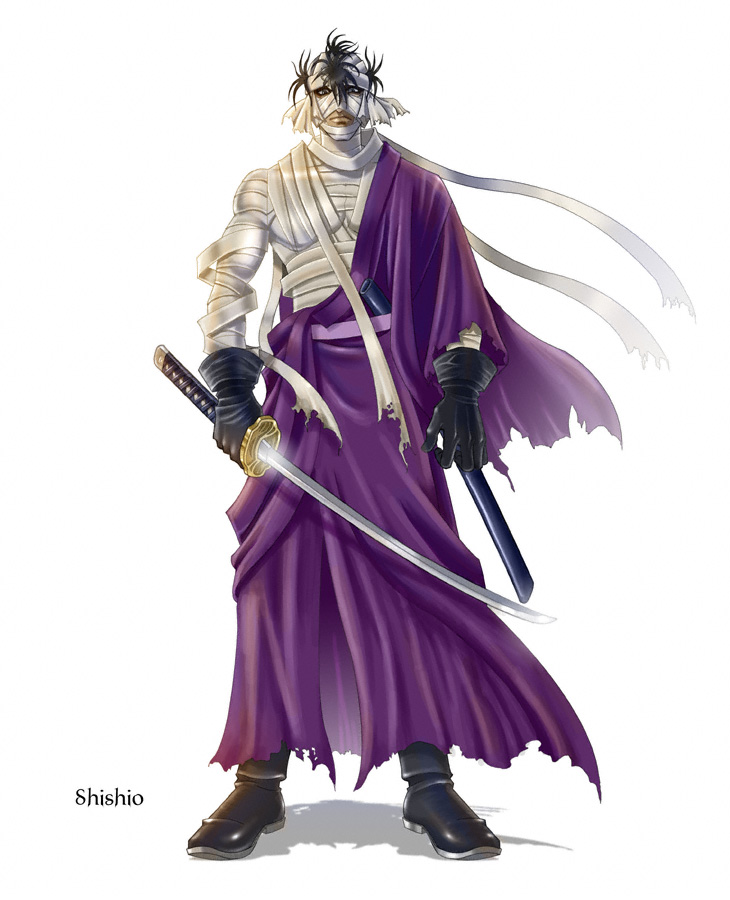
Rurouni Kenshin and Villain Designs

One of my blogs will be drawing a lot from Rurouni Kenshin at certain points, intentionally so.  One of the ways is that I'm going to be writing an arc with a group of ten villains, as a nod to the Juppongatana (or "Ten Swords") arc.  Of course, ten characters is a lot, and since I pride myself on creating strong characters, I started thinking about what exactly these villains are going to be like.  I realized that the job ahead of me was going to be harder than I thought.

You see, I want to pay homage to my inspiration, and that means creating villains in the same style that Watashi did.  And Watashi made some very memorable villains.  Almost all of them had not only a unique design, but a unique fighting style as well.

For example, the Juppongatana included Anji, a monk who knows a martial arts technique that can punch through stone; Usui, a blind, revenge driven man whose ears have become sharp enough to hear a person's heartbeat and sense changes in their body and emotions from it; Kamatari, a cheerful crossdresser who wields a giant scythe; and Henya, who has starved himself to the point that he can propel himself into the air with explosions and gain limited flight using his cape.  And of course, there's their leader himself, Shishio, whose skin consists almost entirely of second and third-degree burns after being burned alive.  In addition, he uses a serrated katana, which he sets on fire using the human fat that's accumulated on it.

These are only a brief description of just a handful of villains from one arc of Rurouni Kenshin.  Some are sympathetic (Aoshi, Anji, and Enishi come to mind), some are monsters (Usui, Shishio, and Gein), but they all have a certain flavor to them.  Something about them that's quirky or unusual enough or that just pushes the willing suspension of belief a little bit further (without breaking it) that makes them extremely memorable.

Now, let's compare this to another series.  One that's fresh in my mind since I'm currently rereading it: Shaman King.  Shaman King's villains seem similar to RuroKen's in some ways, at least in the terms I described.  But later on, when the villains gain more actual flavor and become more numerous, they lose a certain aspect to them.  You see, while they do have a lot of visual flavor, they lack the personality to be memorable.  RuroKen's villains always had a strong design and strong fighting method, and usually had strong personality as well (though some didn't get enough screentime to get to that point).  In Shaman King, the villains had a strong design, and not much else.  And unfortunately, a lot of these designs boiled down to stereotypes.  Sure, they were cool to look at, but they started to lose a lot of appeal when you found out that they weren't much past mariachi, cute witch girl, Gothic Lolita girl, or guy-who's-made-out-of-blocks-that-totally-aren't-legos.  They're good designs, but they lack the substance an the execution to make them good characters and, consequently, good villains.

So what's my challenge in this?  Well, I need to come up with ten characters who have a memorable design, and to make sure that I execute that design in a way that is memorable.  They all need to be unique, though.  Easily identifiable from each other.  Strong motivations.  And I need to do all of that without resorting to cliches or stereotypes.

This should be fun.

Thursday, August 2, 2012

Project Updates

Just an update on what I've been working on lately:

Writing

Wandering from Death: My one openly ongoing Slenderblog.  I'm largely in the development phase for my plot at the moment, but I've got ideas.

Warrior, Wizard: a short story about, well, a warrior and a wizard (or, more accurately, "mage").  The two become close friends but are both forced to deal with their feelings of inadequacy as their growths differ.

Operation Stirling: A collaborative Slenderverse project that is currently remaining secret.  Let's just say that I'm finally starting to get to the meat of my part of the project, though.

I've also reacquired a ladybug bucket hat, so my "DaLadybugMan" persona can finally get back on camera and do some reviews I've wanted to.  I'm leaning towards House of Leaves for the first one.

In addition, I'm also occasionally working on A Terrible Fate, my Zelda fanfic, and a commentary for Don't Shoot The Messenger, though those are less frequent.

Reading

I'm currently reading Chronicles of the Black Company, a compilation of the first three Black Company books.  I'm also picking back up on reading the Trigun manga and have managed to find the first two copies of Video Girl Ai (by the same guy who did I"s, one of my favorite manga), though acquiring the rest of both series might be difficult as the former is fairly expensive and the latter is pretty hard to find.

Watching

I've finally decided on an order to watch the shows I'm catching up on in.  Top priority is ABC's Once Upon a Time, an entertaining (if not fairly campy) show about a town in Maine where storybook characters are living with their "Happily Ever Afters" taken away and no memories of their former life.  Kind of like LOST if LOST had magic OH WAIT

The next two on my list are Trigun, which is about a gunslinging pacifist on a desert planet, and Fullmetal Alchemist, which is about...a kid who's an alchemist, I guess.  A hotheaded alchemist working at his craft under the government.  There's obviously more to both shows, but that's the best I can put their concepts.

Playing

I finished Fire Emblem: Path of Radiance, and was excited to transfer my info and launch into the sequel, Radiant Dawn.  Then I found out that my disc was one of the ones that didn't recognize Easy Mode saves (since the PoR "Easy Mode" came about when the translation was made easier; it didn't exist in Japan).  I COULD play Radiant Dawn anyway, but I want those few bonuses I get from transfering a PoR file over, dammit!  So basically, I'm going to have to pay through all of PoR again.

I've also gotten my hands on No More Heroes and No More Heroes 2: Desperate Struggle.  I've beaten the first three (of 10) bosses in the former, and so far I'm not particularly impressed.  I'll stick with it, though.  See if it improves.

Sunday, June 10, 2012

Project: A Terrible Fate

I know what you're thinking, considering that I write about the Slender Man and I'm a fan of that BEN Drowned creepypasta.  But no, this isn't another horror work.  It IS another Zelda work.

A Terrible Fate is a blog where I'm going to be posting a series of academic articles about Majora's Mask.  Think of it as a dissertation on Majora's Mask that isn't really a dissertation.  A pseudodissertation.  That's what we'll call it.

It's something that I'm really excited for, which is ironic since it's currently something that's driving me crazy.  I've been working on it for about a week, and I've finished the introduction and the plot overview.  I'm about halfway through the glossary, which will need to define characters, races, locations, enemies, Zelda terminology, and gaming terminology.  Basically, I'm hitting the tedious parts of writing it, which is unfortunate.  Necessary, but unfortunate.  At least I've finished the overview now, and while I wish it were better, I do like how I framed it.

Anyway, the next article I'm working on for it is going to go into the game mechanics, which is actually not boring since the mechanics really emphasize the theme.  After that, I'm not sure.  I'll probably cover either Link or the Bombers.

Monday, June 4, 2012

Project: Urban Legacies preview

I've been writing seriously for about seven years now, and in that time, I've grown to develop some rather nasty opinions of fanfiction.  Despite the fact that I know it can put new perspectives on things, that it can explore avenues not canonically taken, and that it's a great way to learn how to write (my first writings were fanfiction, specifically of Star Wars in 6-7th grade, Bionicle in 5th grade, and even some very short stories about characters from the Mandie series when I was just starting school), I have a huge amount of disdain for it.  In my mind, it's not "real" writing.  It's poorly-written self-indulgent fantasies about shipping and how things "should have gone" and is just overall lazy writing that is, by nature, worse than original writing.

I'm telling you this to let you know just how hard it is for me to swallow that pride and say "I'm writing a fanfiction and I'm very serious about it."  Urban Legacies (working title) is a three-part Legend of Zelda modernfic--i.e., a fic that takes place in a modern time.  I've actually been working on it on-and-off for two years (because it's mainly a side-project) but I've done a lot of work with developing my world and outlining my plot.  I do have a ten-chapter draft of the first part, but I'm doing a near-complete rewrite because it was basically the "diet" version of the story I wanted to tell.  This draft will both improve my interpretations of certain elements of the series and expand on the stories that were important but never had a chance to be properly portrayed.

Anyway, just as a preview before I really get into it again and start putting it up in readable places, here's the first segment from the prologue.


The din in the empty lot was growing, but not even the few who braved the night tried to investigate.  Anyone who dared to be out at that hour recognized the noise and, more importantly, knew to stay away.  You never, under any circumstance, risked getting caught in the middle of a brawl between two blin gangs.
This particular fight, faintly illuminated by the bright Malo Mart sign, was a territory dispute being settled by a bokoblin gang leader and a moblin gang leader.  The two were evenly matched, and a jeering circle of both their underlings surrounded them as the struggle went back and forth.  The moblin had dominance, his hands around the throat of the pinned bokoblin, but the latter was still fighting, his punches wearing away at his opponent.  Unable to shield his face or withstand the blows, the moblin released the bokoblin, and the two split apart.
The two were both visibly limping as they circled, locked into their deathmatch by the other members of the two gangs.  The bokoblin grinned as he rubbed his neck.  “I ain’t goin’ down that easy, pal.”
The moblin shot him a death glare, the hair lining most of his body matted with both of their blood.  “You’re on moblin territory, kid.  You’re not leaving here alive.” 
The sole outside observer, watching from the roof of Malo Mart decided that it was time to break the stalemate.  He stepped out of the shadows, his face hidden by a mask—its piglike features providing a mocking caricature of the blins—and drew his gun, measuredly and methodically leveling it at the two figures in the center of the circle.
A shot rang through the night, silencing the throng’s roar.  A bullet ricocheted off the cement, chipping out a mark directly between the two.
“Awww, goddesses,” the failed assassin groaned as the crowd below turned as one to his hiding place.  He dove backwards, flattening himself against the roof as shots rang out from below, indiscriminately rechristening the store “AL ART.”  The man swore, discarding the gun, and listened as the clips emptied and the blins began turning on each other.  Each side blamed the other for the failed interference, and while neither side had particularly high qualms about maintaining their own honor, they were quick to insult the other faction’s lack thereof.
The man, already long forgotten, took the opportunity to climb down.  Somehow, by some fortunate chance, things had turned out better than expected.  Both sides were enraged now.  It would be a complete bloodbath.
The masked man’s feet hit the ground, and he casually strolled around the building.  Yes, it was a chaotic, frantic mess.  And he, he thought with satisfaction as he drew the sword slung across his back, would help clean it up.